
The Architect of the Groove
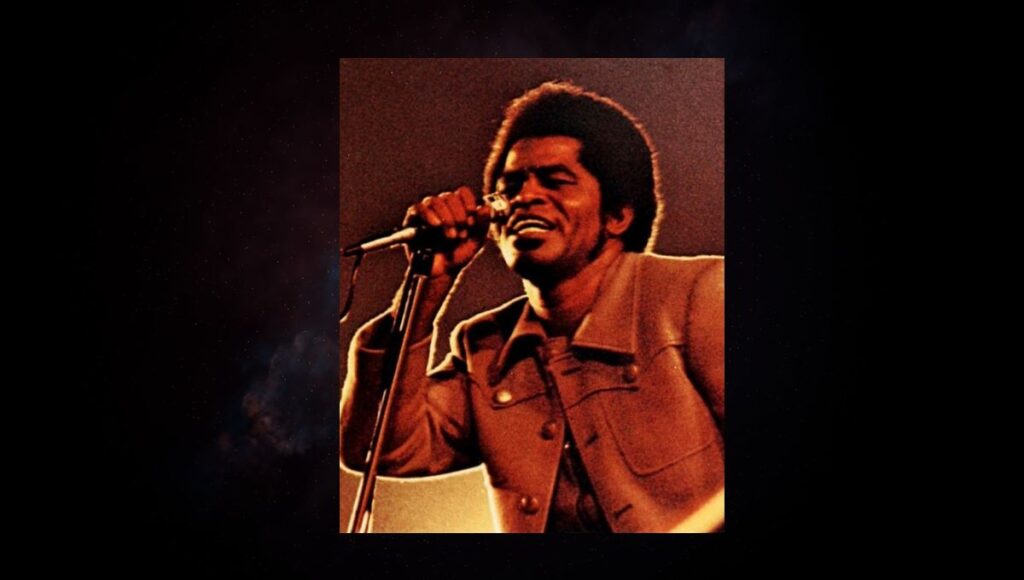
The image is iconic: knees hit the stage with a dramatic crash, sweat soaks the velvet, and in a pinnacle of theatrical vulnerability, the artist appears to collapse. Enter the cape—a ritual of mystique and resurrection inspired by wrestler Gorgeous George. But beneath the glamour of this cathartic performance, James Joseph Brown Jr. operated with the precision of an engineer and the rigor of a general. With over 100 million records sold, the self-proclaimed “Godfather of Soul” was not just an entertainer; he was the architect of an aesthetic revolution that deconstructed melody in favor of absolute rhythmic precision.
1. The Dictatorship of Perfection: The Musical Courtroom
For Brown, funk was not a genre; it was an exact science based on “The One“—the first beat of the measure, where all the band’s power had to converge. To achieve this unity, he imposed an unprecedented “creative tyranny.” The James Brown Revue operated under military discipline: musicians and dancers were required to rehearse in full uniforms, impeccable bow ties, and shoes polished brightly enough to reflect the theater lights.
On stage, Brown played judge and executioner in real-time. While gliding across the floor, he used a secret code of hand signals to flag infractions—a flat note, a missed dance step, or unpolished shoes resulted in immediate fines deducted from the performer’s pay. It was a musical tribunal invisible to the audience but felt in the pocketbook of every instrumentalist.
“You had to be on time. You had to have your uniform. Your things had to be intact. You had to have your bowtie… The shoes had to be shined. This is what Brown expected.” — Maceo Parker, legendary saxophonist.
2. The Peacemaker of 1968: Music as Social Diplomacy
On April 4, 1968, the assassination of Martin Luther King Jr. threatened to set the United States ablaze. As major cities collapsed into riots, Boston awaited a James Brown concert. In a bold move, the performance was broadcast on local television to encourage people to stay home and remain peaceful. Brown not only prevented an uprising in the city but became a direct interlocutor for the White House.
At the request of President Lyndon B. Johnson, Brown acted as an ambassador of calm in Washington, D.C., using his influence to preach that violence “was not the way.” His effectiveness as a social leader, bolstered by owning his own communication channels like radio station WJBE 1430 Raw Soul, proved his voice carried an authority no politician of the time could emulate.
3. The Architect of the Sample: The Global Foundation of Groove
There is a statistical irony in Brown’s career: he holds the record for the artist with the most singles on the Billboard Hot 100 without ever reaching number one. However, his sovereignty is absolute through the sample. Brown is the most sampled artist in history, and his track “Funky Drummer” provided the rhythmic DNA for the birth of Hip-Hop.
His architecture of polyrhythms and syncopation transcended borders, influencing the birth of Fela Kuti’s Afrobeat, as well as Juju and Senegalese Mbalax. If global pop today is governed by rhythm over harmony, it is because James Brown redesigned the nervous system of contemporary music.
4. The Triumph of Self-Creation: From Brothel to Reformatory
Brown’s resilience was born from a childhood on the brink. Abandoned by his mother at age two during the Great Depression, he grew up in Augusta, Georgia, in a brothel managed by his aunt. There, between shining shoes for troops at Camp Gordon and watching Louis Jordan in the short film Caldonia, Brown forged his iron will.
At 16, an armed robbery conviction could have ended his story. However, with the crucial help of Bobby Byrd for his early release, Brown began a radical process of reinvention. He dropped the “Jr.” from his name and decided the world would bow to his beat. The man who lived on the margins transformed trauma into the work ethic that earned him the title “The Hardest Working Man in Show Business.”
5. The Enigma of the Final Act: A Death Under Suspicion
Even the end of his life in 2006 was marked by the turbulence that defined his journey. While the official cause was heart failure due to pneumonia, a 2019 CNN investigation reopened deep wounds. Dr. Marvin Crawford reported suspicions regarding drug residue found in a breathing tube, raising the hypothesis of homicide.
The refusal of an initial autopsy by his daughter, Yamma, and intense legal battles over his will—which initially excluded his last partner and son James II—turned his final rest into a legal and familial quagmire. Brown’s body remained in a casket for months as the fight for his financial and biological legacy unfolded, a bitter reflection of a man who tried to control every beat until the very end.
Conclusion: The DNA Governing the Present
James Brown is gone, but his rhythmic architecture is the invisible foundation of almost everything we hear today. From percussive minimalism to social activism through art, he proved that rhythm is a tool of power. We are left with a provocative thought: could the genius that changed the world have existed without the cost of such intransigence? While we debate his character, the world continues to dance exactly to the time he set. Because in the universe of pop, James Brown still owns “The One.”
Would you like me to create an SEO-optimized summary or social media captions for this article as well?
Leave a Comment